
Child-centered Montessori preschool and early learning for children 12 months to 5 years
We offer more than traditional daycare. Littleton Montessori serves children ages 12 months through kindergaren in a calm, welcoming early learning environment.
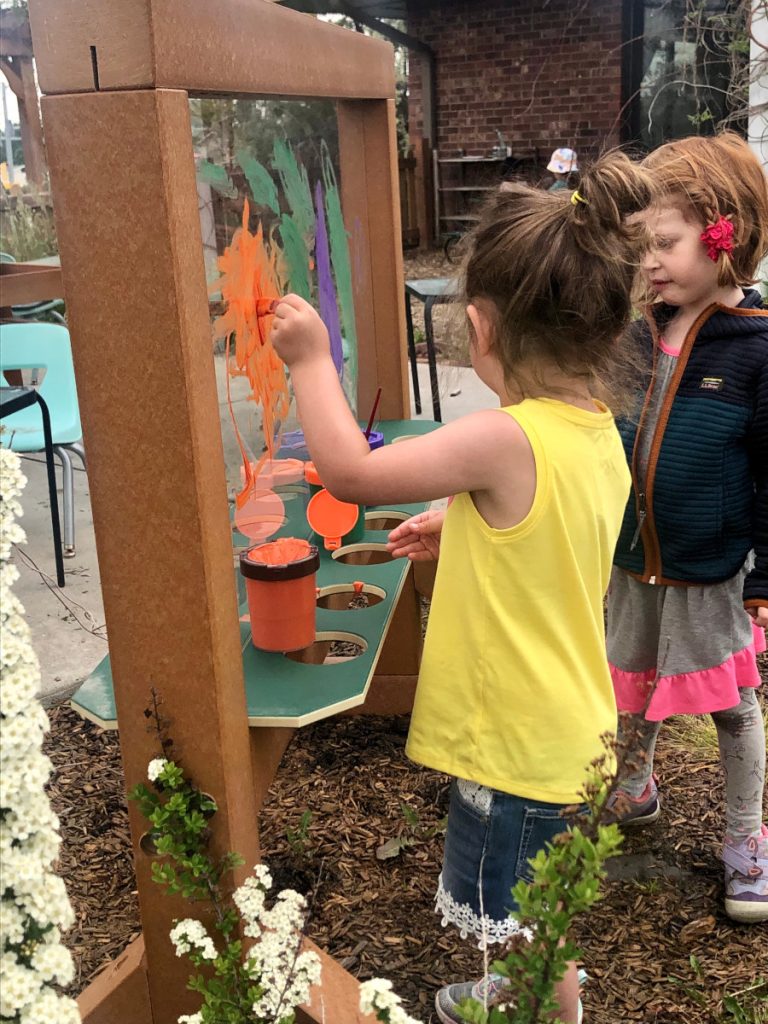
Since Annaka Blomfield took ownership in 2024, she has reinforced the school’s commitment to consistency, clear expectations. and authentic Montessori practice.
Families throughout Littleton choose our preschool for a steady nurturing setting where children develop independence, capability and strong early foundations.
Montessori education is an approach to early learning developed by Dr. Maria Montessori. It is based on the belief that children learn best through hands-on experiences, movement, and meaningful work.
In a Montessori classroom:
Our programs help prepare children for the next stage of learning by strengthening early language, math readiness, and social skills. Children build focus and responsibility in hands-on classroom experiences designed for meaningful growth.
In most traditional preschools a teacher teaches the children educational concepts in a group. The Montessori education philosophy emphasizes the development of a child at the cognitive, social, and emotional level. Children learn on their own, at a pace they are comfortable with, and work with a large number of educational materials according to their own choice. Because of this, learning becomes an exciting process for them, which lead to concentration, motivation, and self-discipline. The love for learning comes naturally to them.
Montessori classes are multi-aged where children of different ages work in the same classroom. The older children in the classrooms share their knowledge with the younger ones, reinforcing their knowledge and teaching them leadership. The younger children are inspired by the things the older children can do and strive to grow to that level themselves.
A Montessori teacher is simply a guide stepping in when they see a child is “stuck” or ready to learn a new skill. In a Montessori environment the focus is on the student not the teacher. This allows children to learn independently, with the guidance and support of a teacher whose primary focus is observing how a child learns, and tapping into those styles and approaches that work best for each child.
The Montessori materials used to teach reading, writing, arithmetic, geography, science, music, and social studies are unique. These materials, designed by Maria Montessori are designed specifically with the understanding of how physiological and neurological developments impact a child’s learning. The classroom materials take abstract ideas and put them in a concrete form that makes sense to these developing minds. This can be seen clearly in the materials available for teaching arithmetic.
Our teachers are trained to observe children’s activities. When a child has mastered a skill, the teacher will give the child a lesson that is more challenging, considering the age and interest of each child. Because the environment is so stimulating and exciting, children seldom “do nothing.” There are hundreds of prepared lessons for the child to choose from every day.
It has been our experience, and the experience of virtually all Montessori schools, that the transition is very smooth. The brief adjustment period is no more than the adjustment that occurs when transferring from one traditional to another traditional school. Montessori alumni typically score well on the standardized tests and consistently show enhanced ability for following directions, independent thinking, and adapting to new situations. Teachers often comment on the leadership abilities of the child that comes to them via a Montessori program, as well as their overall depth of knowledge.
Research has shown that Montessori children are well prepared for later life academically, socially and emotionally. In a Montessori class, children are engaged in activities which interest them and that they learn from. This engagement, or desire and love of learning is fostered and internalized by the children, leading them to be lifelong learners and be engaged in life after school. In today’s world, being able to “think outside the box” is a big component to success and a Montessori education encourages the creative and critical thinking that creates this trait.